
Frozen Supply Lines
January highs in Madison, WI average about 27°F, so pipes in outside walls, crawl spaces and garages split most often in deep cold. The line gets found and shut off before drying starts.
A burst pipe or overflow soaked the floors? Get the house dried, cleaned and checked so nothing wet ends up sealed behind new walls.
Dry it right the first time
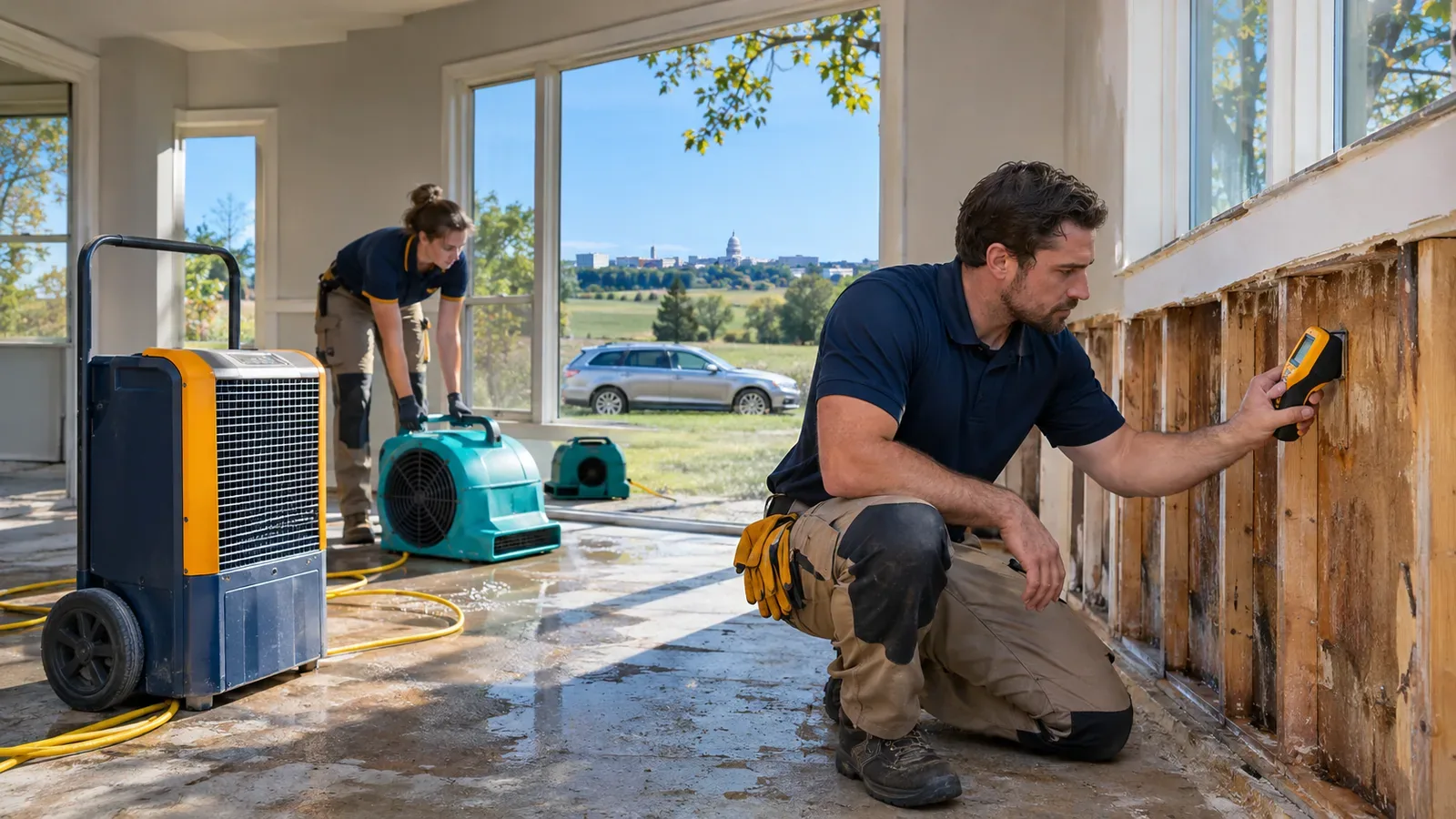
Water restoration services pick up where the mop leaves off. Once standing water is out, the job is getting moisture out of drywall, framing, subfloors and insulation, then cleaning anything the water touched.
The contractor sets up air movers and dehumidifiers based on moisture readings, checks them during the drying and moves equipment as wet spots shrink. Materials that can't be dried, like swollen particleboard or soaked carpet pad, are pulled so the rest can dry.
When a job also needs rebuilding, the drying is just one stage of Madison property restoration, which runs from pumping to finished walls.
What stays and what goes
Clean water from a supply line gives the most options: drywall, hardwood and carpet can sometimes be dried in place if the work starts early. Water from a dishwasher, washing machine or toilet overflow carries more contamination, so carpet pad and porous materials are usually replaced.
Hardwood floors that cup can often be dried flat with drying mats, while laminate and engineered floors that swell at the seams rarely recover. Plaster walls in older Madison, Wisconsin homes dry slower than drywall and are checked longer.
Rugs, books and furniture are moved out of the wet area or blocked up off the floor so they stop wicking water.
When it's a pipe
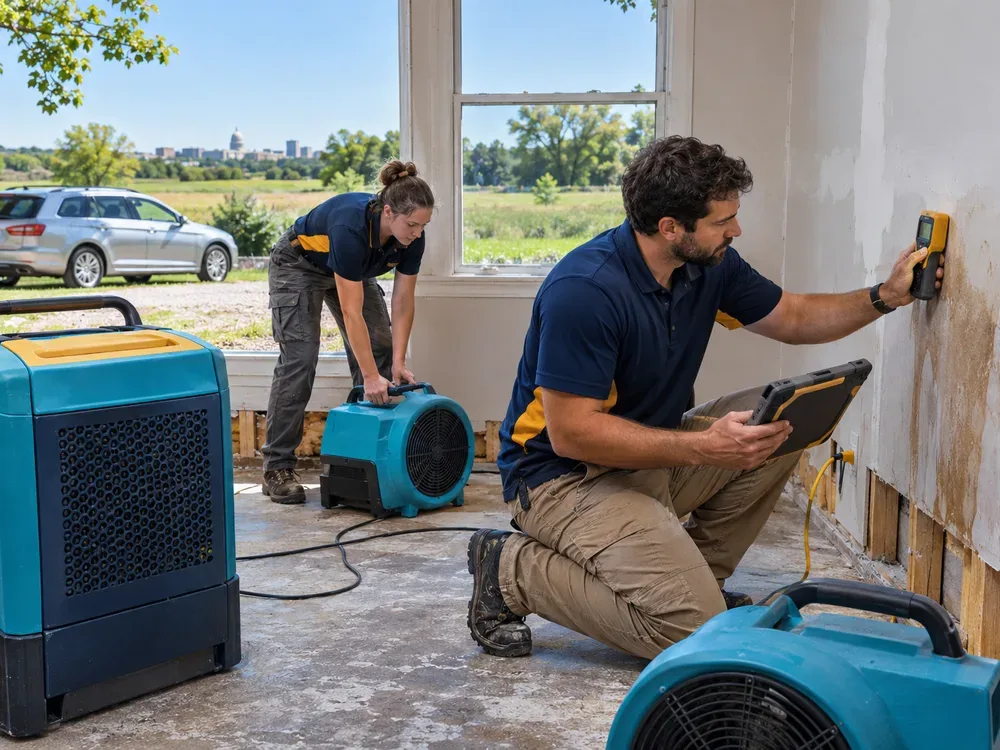
January highs in Madison, WI average about 27°F, so pipes in outside walls, crawl spaces and garages split most often in deep cold. The line gets found and shut off before drying starts.
A failed toilet seal or tub drain on the second floor shows up as a stain or sag below. The ceiling is opened just enough to dry the cavity.
Snow that melts and refreezes at the eaves backs up under shingles and drips into attic insulation and top-floor walls.
A water heater that splits in a basement can empty across the floor, soaking carpet, drywall and anything stored nearby.
Burst fill hoses release a lot fast, often under cabinets, where it soaks the subfloor before anyone sees it.
An overflow that sits for hours soaks the subfloor and the ceiling below, and it's handled as contaminated.
How the drying usually runs
Every step is set by the readings, not a calendar.
Call (608) 471-7533The main valve or fixture shutoff gets closed, and power is cut to wet areas if needed.
Moisture meters show where it traveled past the visible line.
Pad, swollen trim and saturated insulation come out so the framing behind can dry.
Air movers and dehumidifiers go in based on the room size and how wet it is.
Readings are taken during drying, and equipment is moved as areas dry out.
Surfaces are cleaned, and photos and readings are kept for your insurance claim.
What it runs
Water damage cleanup in Madison typically costs about $1,200 to $5,000 for a residential job, and drying is usually the largest part of that.
Equipment is often billed by the day, so a small clean-water leak caught early costs far less than a basement that sat wet over a weekend.
Rebuilding drywall, flooring and trim is usually quoted separately once everything is dry.
Before the crew arrives
1. Close the main shutoff valve if you can reach it safely.
2. Turn off power to the wet area at the panel only if you can do it from a dry spot.
3. Move rugs, electronics and boxes off wet floors.
4. Take photos of every wet room before anything is moved or thrown out.
Pipe burst or tub overflowed? Get drying started before floors swell.
Call (608) 471-7533Process questions
Sometimes. Drywall wet with clean water and dried early can stay, but drywall that's swollen, crumbling or touched by dirty water is usually cut out above the wet line.
Often, if drying starts early. Cupped boards can flatten as they dry, but boards that crown or separate badly may need to be replaced.
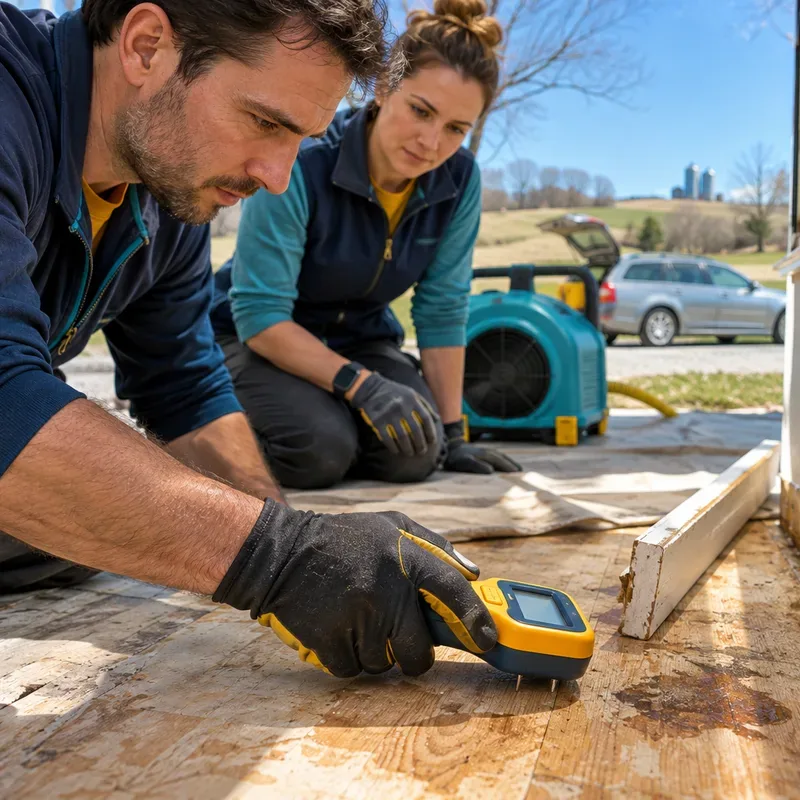
With moisture meters. Readings from the wet materials are compared with dry areas of the same material, and equipment stays until they match.
Many policies cover sudden pipe bursts, but only your insurer can confirm it. Report the loss early, keep photos and save damaged materials until the adjuster sees them.
Water from a supply line starts clean, but it picks up dirt and bacteria the longer it sits. Wear gloves and keep children and pets out of the room.
Talk through what happened and get the drying planned before more of the floor and walls soak through.