
Sump Pump Failures
When a pump quits during a storm, the basement fills from the pit; a portable pump keeps up while the sump is repaired.
Inches of water on the basement floor? Get it pumped and vacuumed out so drying can start before carpet, walls and belongings soak it up.
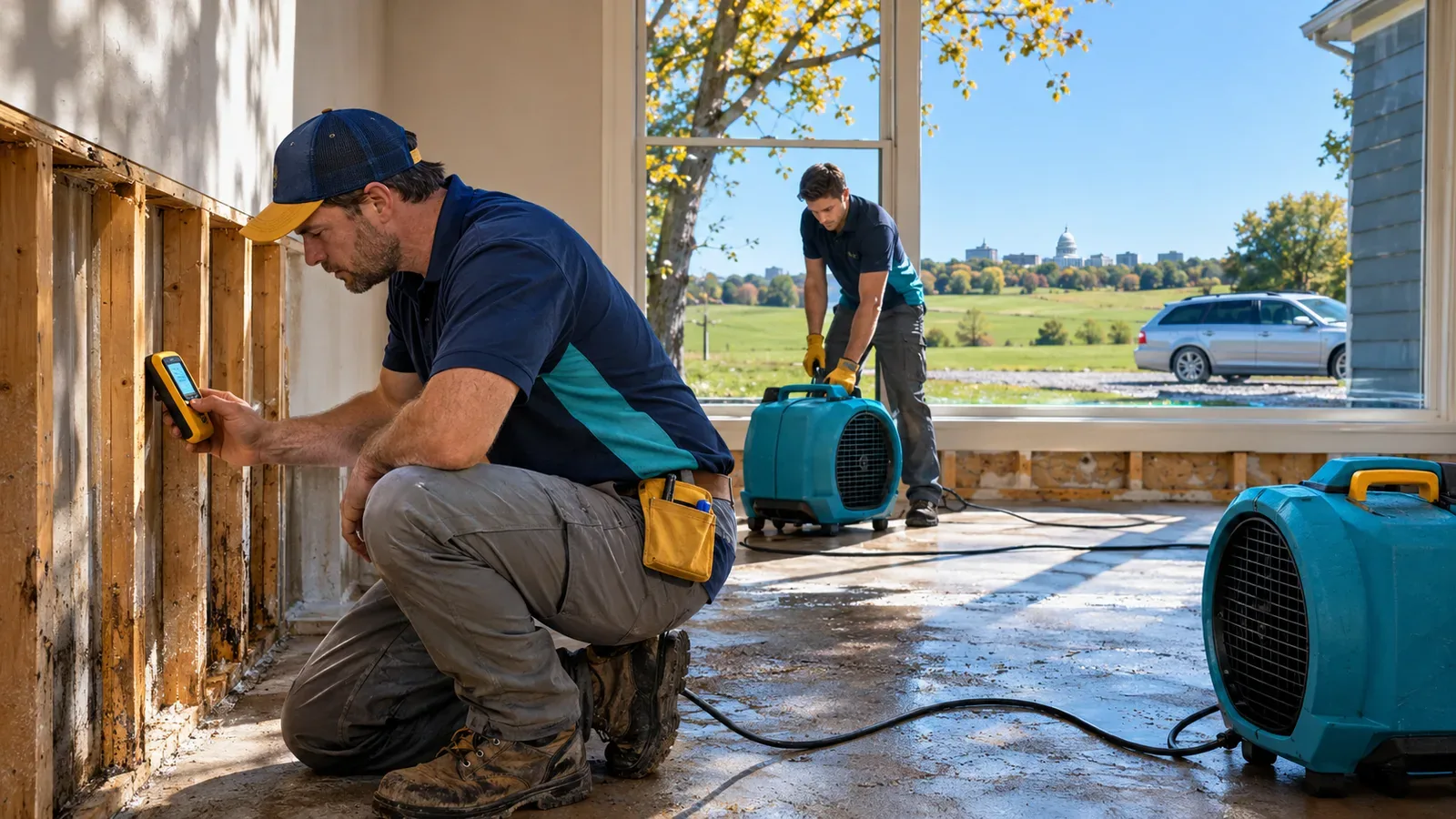
Get it out first
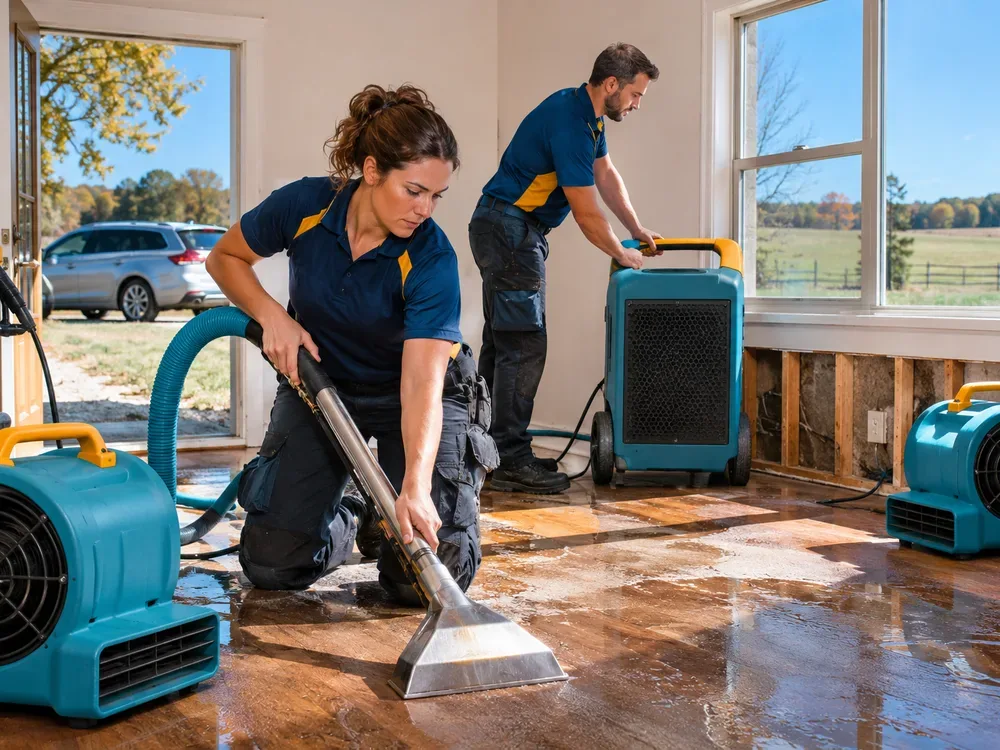
A water extraction company in Madison, Wisconsin brings portable or truck-mounted extractors, submersible pumps and wet vacuums sized for the job. Deep water comes out with pumps; the last layer comes out of carpet and pad with weighted extraction tools.
Every gallon pulled out now is a gallon the dehumidifiers don't have to remove later, which shortens drying and lowers the bill.
Extraction is the first step of water damage and restoration work that ends with dry, rebuilt rooms.
When it's the sewer
Madison, WI property owners own the sewer lateral from the house to the City main in the middle of the street, so a backup caused by a blocked lateral is the owner's to clear.
Report a suspected backup to City Engineering's operations line at (608) 266-4430. Crews check the public main first and tell you whether the problem is the main or your lateral.
The City's backwater valve program can reimburse 75 percent of the lowest quote, up to $1,500, for eligible properties; the work needs a licensed plumber and a building permit.
When it won't stop
When a pump quits during a storm, the basement fills from the pit; a portable pump keeps up while the sump is repaired.
The main gets shut off first, then pumping starts once nothing new is coming in.
Anything rising from a floor drain is treated as contaminated until the source is known.
Clogged wells fill during heavy rain and pour through basement windows; the well is cleared as the room is pumped.
When a toilet or tub overflow reaches the floor below, both levels get extracted.
Seepage that keeps coming through walls during a thaw needs pumping until the ground dries out.
How pumping usually goes
Safety comes first in any water removal. Madison basements get pumped from the deepest point out, then the carpet and floors.
Call (608) 471-7533Power to the flooded area is confirmed off before anyone steps in.
Submersible pumps handle anything more than an inch or two deep.
Belongings are moved or blocked up so they stop soaking.
Carpet is extracted and the pad is removed if it can't be dried.
Concrete, tile and vinyl get a final pass with wet vacuums and squeegees.
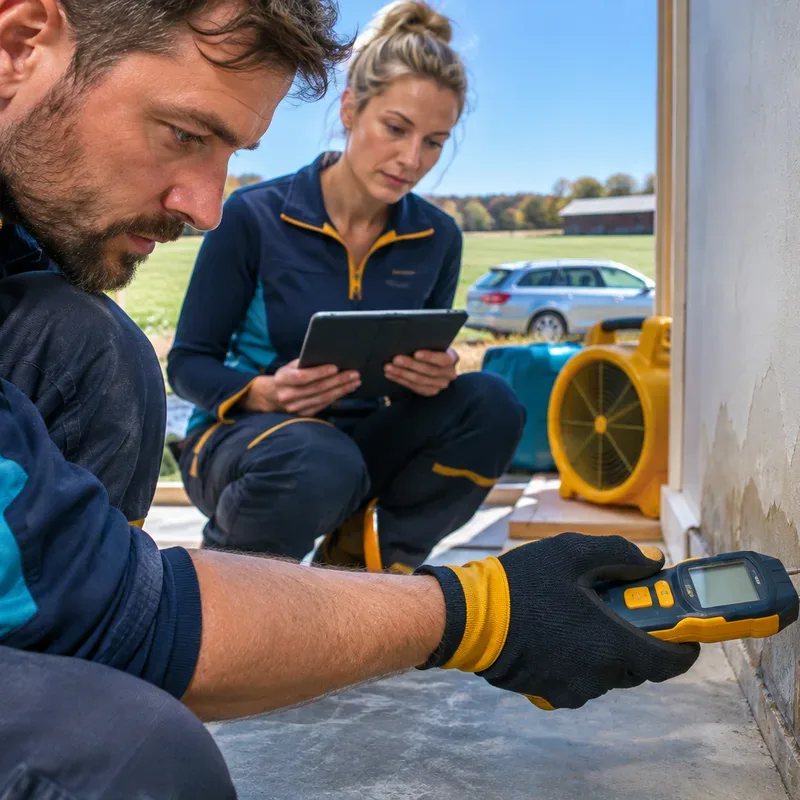
Moisture readings show what the drying equipment still has to handle.
Pumping costs
Extraction is usually billed as part of the cleanup, and water damage cleanup in Madison typically costs about $1,200 to $5,000 for a residential job.
Deeper water, sewage and finished basements push the cost up because of the extra pumping, removal and cleaning.
Ask whether the quote lists extraction, equipment days and removal separately so it lines up with your insurer's estimate.
Until help arrives
1. Stay out of standing water if it's near outlets, cords or the electrical panel.
2. Shut off the water at the main if the source is a pipe and you can reach the valve safely.
3. Don't use a household vacuum, and keep children and pets away from sewage.
4. Photograph the depth and damaged items before anything is moved.
Still rising in the basement? Get it pumped out now.
Call (608) 471-7533Pumping questions
For a small puddle on concrete, yes. For carpet, pad or more than an inch of water, a shop vac leaves too much behind and drying takes far longer.
It can be. Water from a floor drain, sewer or outside flooding can carry bacteria, and water near outlets can be electrified, so stay out until power is off.
Carpet wet with clean water can often be extracted and dried in place, though the pad is usually replaced. Carpet soaked by sewage is removed.
If the problem is the City main, City Engineering handles the main. If it's your lateral, it's yours to fix; sewer backup coverage is usually a separate add-on to homeowners policies.
Only when the air outside is drier than inside. On humid summer days open windows can slow drying, so the dehumidifiers do the work.
Call to describe the depth and the source and get pumping planned before it soaks into walls and belongings.