
Photos Before and After
Pictures of each wet room and damaged item before removal back up what's on the claim.
Comparing companies after a leak? Know what the work should cover, what to ask and what a fair quote lists before anyone tears out walls.
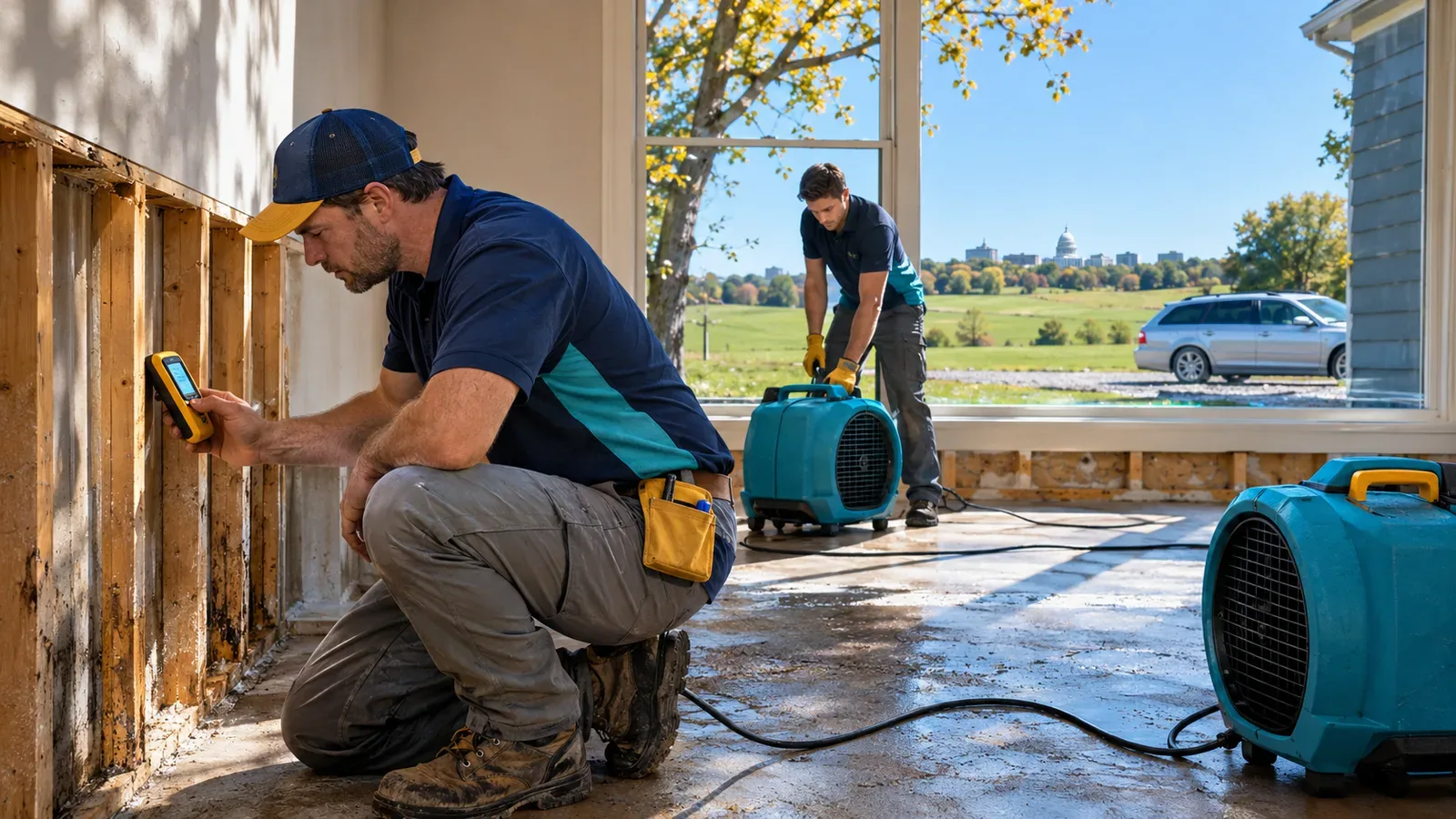
One crew, start to finish
Water damage restoration companies cover the path from wet to finished: extraction, moisture mapping, drying, cleanup and, at many firms, the rebuild. Some only do the drying and hand the repairs to a separate contractor, so ask which kind you're calling.
Mold remediation, contents cleaning and board-up are common add-ons. Fire and smoke work is offered by some companies but not all.
To see every service in one place, start with Madison water damage restoration.
The first visit
Most crews serving Madison, Wisconsin start by checking the source, taking moisture readings in and around the wet rooms and photographing the damage before anything is moved.
A good water damage restoration company should explain what can be dried in place, what has to come out and why, before demolition starts.
You'll usually sign a work authorization; read it for how equipment days, removal and rebuild work are billed.
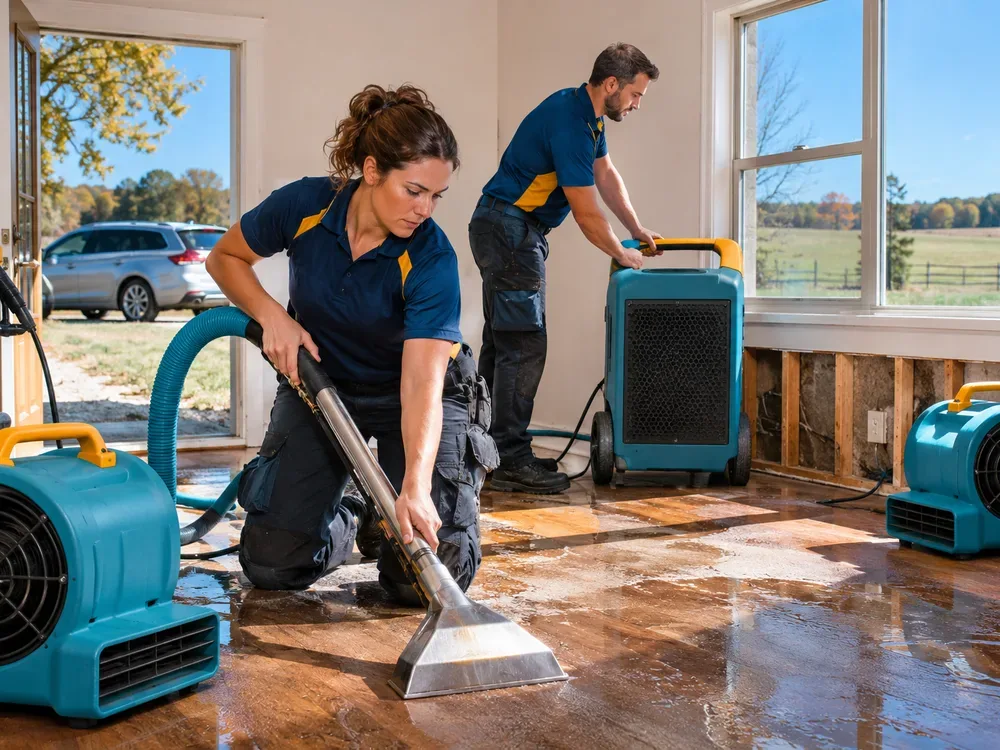
Paperwork that helps
Pictures of each wet room and damaged item before removal back up what's on the claim.
Daily readings show why equipment stayed as long as it did.
A line-by-line list of removal, drying and rebuild work is easier for an adjuster to review.
Keeping a piece of the damaged flooring or the failed part helps if the adjuster can't visit right away.
The insurer decides coverage; the contractor documents the loss and the work.
Your deductible is usually paid to the contractor; ask how the rest is billed if the insurer pays in stages.
Before you sign
Ask these before any restoration contractors start work.
Call (608) 471-7533Find out whether the same crew rebuilds or hands it to someone else.
Ask how readings are taken and what counts as dry.
Read how equipment, labor and insurance payments are handled.
Ask who sends photos and the scope to your insurer.
Ask how hidden growth found during demolition is handled and priced.
Ask whether the rebuild needs a permit and who pulls it.

Reading the quote
Water damage cleanup in Madison, WI typically costs about $1,200 to $5,000 for a residential job, so a quote far outside that range deserves questions.
A fair quote lists extraction, equipment days, removal, cleaning and rebuild items separately, with quantities.
Repairs are usually a separate line or a separate estimate once drying is done.
Local conditions
After the August 2018 storms, the City of Madison added about 1,200 more homes to its flash-flood risk areas, so many local losses involve outside flooding, not just plumbing.
Rebuild work like replacing drywall, trim or insulation can need a permit from City of Madison Building Inspection; ask whether the company pulls it.
Clear valuables from the work area, note where the main shutoff and electrical panel are, and keep pets out of rooms with equipment running.
Comparing companies after a leak? Ask these questions first.
Call (608) 471-7533Before you hire
In most cases, no. You can usually choose your own contractor; tell your insurer who you picked and share the scope and photos.
Mitigation stops the damage: extraction, drying and removal. Restoration includes that plus the rebuild of drywall, floors and finishes.
Not always. If growth is visible, it can usually be removed without testing; testing helps when there's a musty smell but no visible source.
Usually, yes. Emergency extraction and drying can begin to stop further damage; keep photos and damaged samples so the adjuster can still see what happened.
The scope, how equipment and labor are billed, who receives insurance payments and what happens if hidden damage is found.
Call to talk through the damage and what the job should cover.