
Musty Odor
A smell that's strongest in one room or closet usually means growth you can't see yet.
Musty smell or dark spots after a leak? Get the growth contained, removed and the moisture fixed so it's less likely to return.
Remove it, don't hide it
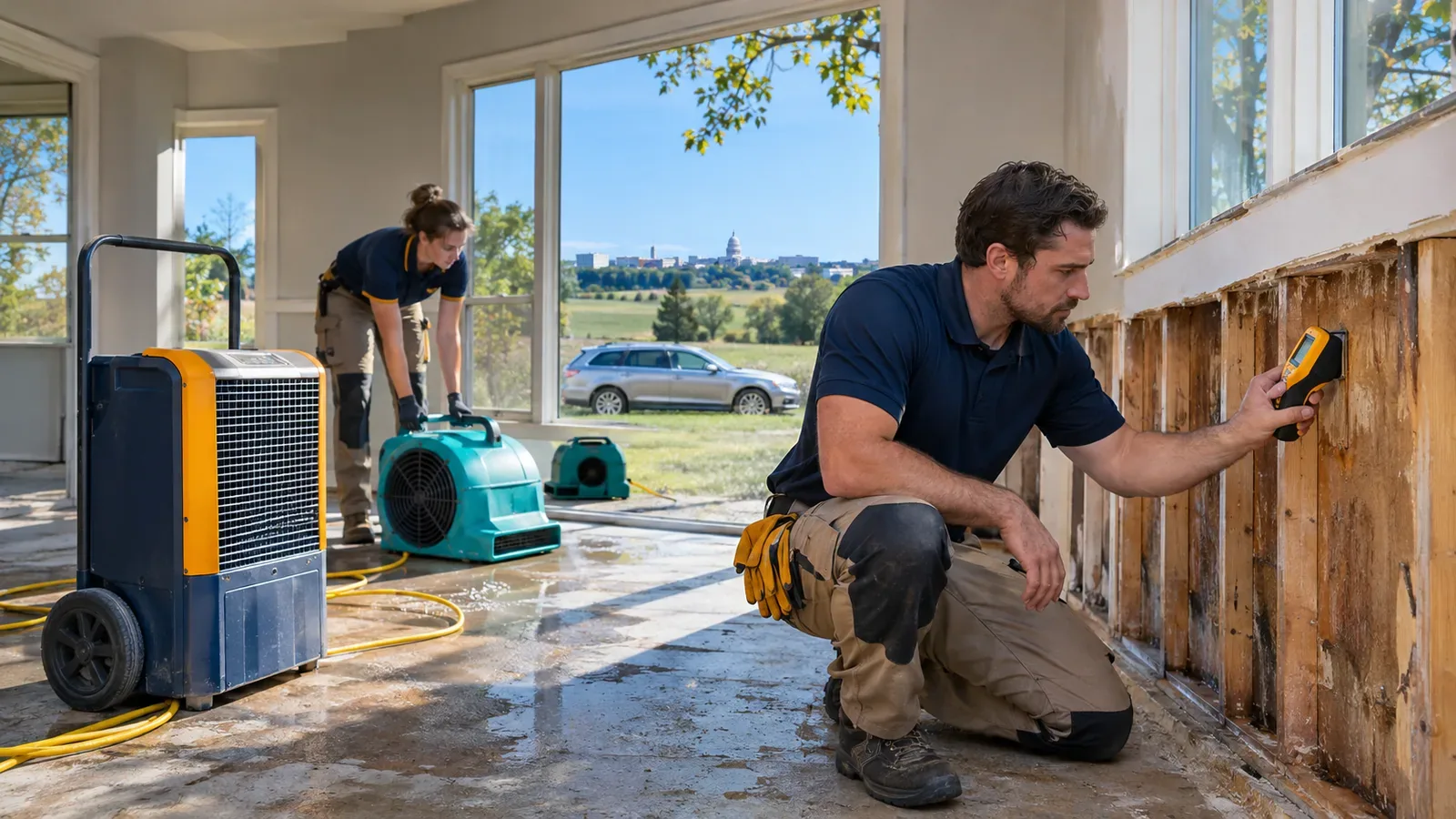
Mold remediation means containing the area, removing moldy materials that can't be cleaned, cleaning what can stay and drying the space so growth doesn't take hold again. Painting over it or spraying bleach on drywall only hides the problem.
Porous materials like drywall, insulation and carpet with growth are usually cut out and bagged. A proper mold removal service then cleans and dries wood framing and concrete, and HEPA vacuums and air scrubbers capture spores stirred up during the work.
Most growth here starts with a leak, which is why it pairs closely with water damage restoration Madison WI work.
Where it grows
July highs in Madison, WI average about 82°F, and when humid summer air hits cool foundation walls, it condenses and feeds growth on drywall, stored boxes and carpet.
Bathrooms without working exhaust fans grow it on ceilings and behind toilets, and attics with ice-dam leaks or poor venting grow it on roof sheathing.
After floods, mold damage hides in the places nobody looks: inside walls, under carpet and behind basement paneling, where materials stayed wet for days.
Signs to watch
A smell that's strongest in one room or closet usually means growth you can't see yet.
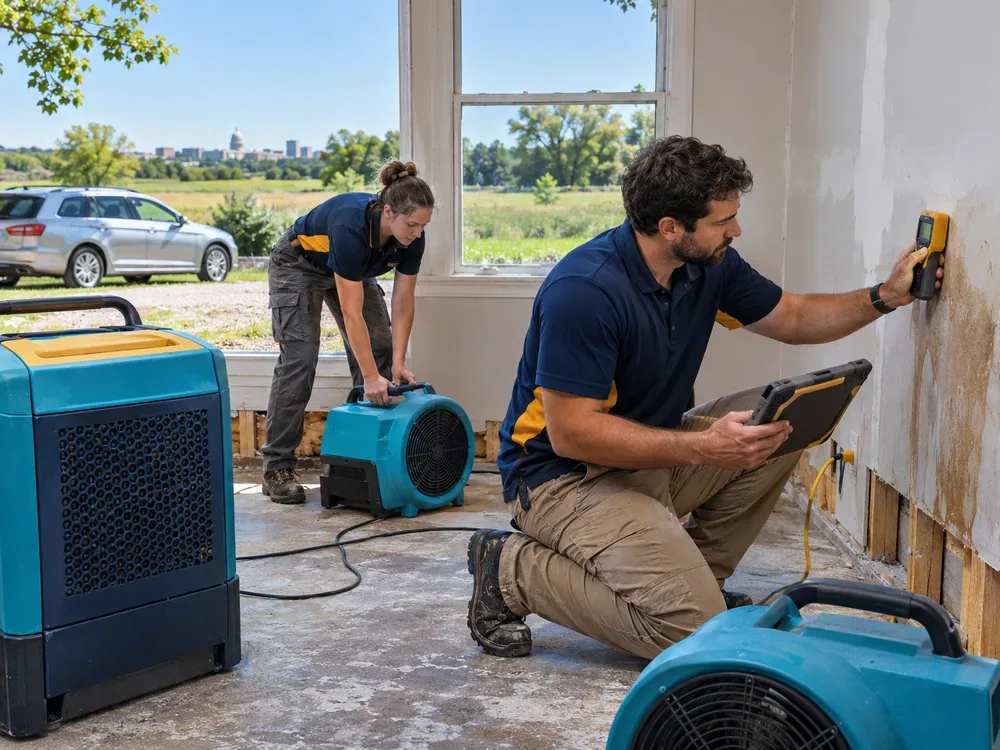
Spots on drywall or baseboards after a leak point to moisture that wicked up the wall.
Paint lifting off a wall often has moisture behind it.
Tiles under ducts or pipes that stay damp grow spots on the back first.
Stuffiness or coughing that improves when you leave the house is worth mentioning to your doctor.
Insulation that got wet and wasn't replaced can hold moisture and growth inside the wall.
How the work usually runs
The steps follow EPA guidance for cleanup in homes.
Call (608) 471-7533The leak, seepage or humidity problem is found first, or the growth comes back.
Plastic sheeting and zipper doors seal the work area off from the rest of the house.
HEPA air filtration keeps spores from drifting into clean rooms.
Drywall, insulation and carpet with growth are cut out and bagged inside containment.
Framing and hard surfaces are scrubbed and vacuumed with HEPA equipment.
The area is dried and checked before walls are closed back up.
What it usually costs
Mold remediation in Madison typically costs about $1,100 to $3,500 for a contained residential area. A small bathroom ceiling lands near the low end; a basement with growth behind finished walls runs higher.
Size, access, how much drywall and insulation has to come out and whether the moisture problem needs fixing first all change the price. Larger mold abatement jobs behind finished walls take more containment and disposal.
Testing isn't always needed when growth is visible; the EPA says the priority is removing it and fixing the moisture.
Stopping the cause
Mold mitigation services only work if the moisture is fixed. That means repairing the leak, drying the structure fully and keeping basement humidity in check.
The EPA recommends keeping indoor humidity below 60 percent, ideally between 30 and 50 percent. A basement dehumidifier and working bathroom fans do most of that work in Madison, Wisconsin summers.
Areas larger than about 10 square feet call for a professional mold remediation service under EPA guidance, especially when the growth came from sewage or flooding.
Musty basement or spots on the wall? Get it checked.
Call (608) 471-7533Good to know
Small areas, yes. The EPA says you can usually handle less than about 10 square feet yourself with gloves, goggles and an N-95 mask, as long as the moisture problem is fixed.
Bleach can lighten surface growth but doesn't fix growth inside porous drywall. Moldy drywall is usually cut out and replaced.
Usually not when growth is visible. The EPA says sampling is generally unnecessary in that case; testing helps when you smell it but can't find it.
Sometimes, when the mold comes from a covered sudden leak. Mold from long-term humidity or seepage is often excluded, so check with your insurer.
It can if the moisture returns. Fixing the leak, drying fully and keeping humidity below 60 percent are what keep it away.
Call to describe what you're seeing and get the growth removed and the moisture source fixed.