
Supply Lines and Valves
Fittings at sinks, toilets and the main shutoff are checked for drips and corrosion.
Stained ceiling, wet carpet or a musty basement? Find out how far the moisture spread and what has to come out before it gets worse.

Start with the source
Water damage cleanup starts with stopping the source and finding the edges of the wet area. A stain on drywall is usually smaller than the wet zone behind it, and carpet can feel dry on top while the pad underneath is still soaked.
From there, standing water is extracted, wet materials are sorted into dry-in-place or remove, and drying equipment goes in. The goal is dry materials and a clear list of repairs, not just a floor that looks dry.
For the full path from pumping to finished walls, read how water damage restoration Madison jobs are usually handled.
Why older houses hide it
The median home in Madison, WI was built in 1977, so many supply lines, water heaters and shutoff valves are decades old. Corroded fittings and brittle hoses tend to fail slowly, leaving stains and soft spots long before a visible puddle.
Finished basements from that era often have carpet glued to concrete and drywall run to the floor, which wicks moisture up the wall. Bathrooms above kitchens leak through grout and tub drains into the ceiling below.
Slow leaks matter as much as sudden ones. A drip under a sink can rot a cabinet base and subfloor without ever pooling on the floor.
What gets checked
Fittings at sinks, toilets and the main shutoff are checked for drips and corrosion.
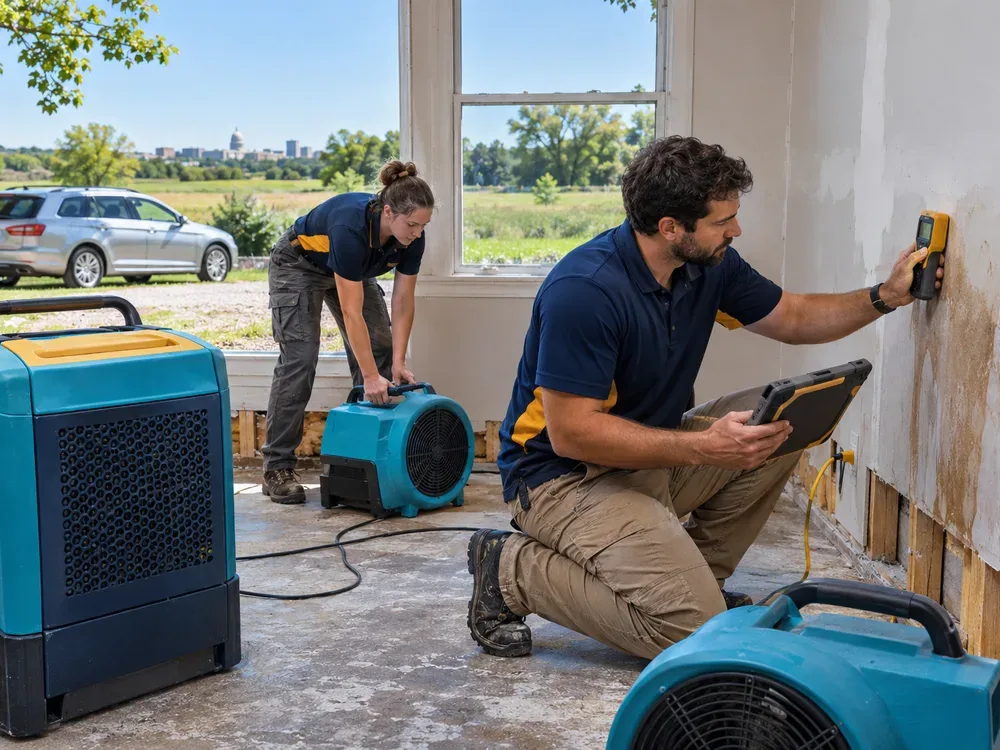
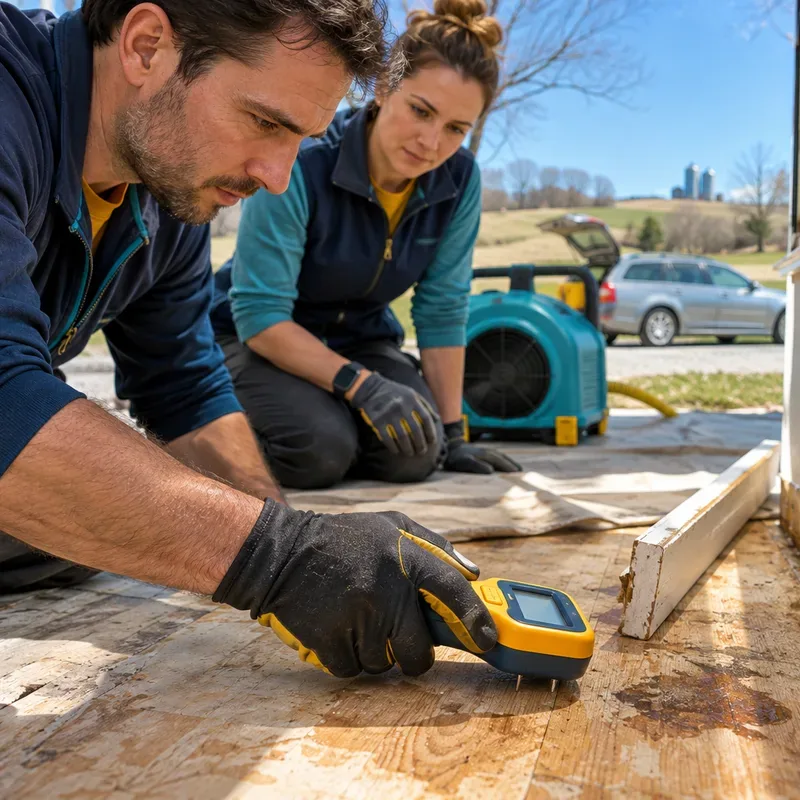
Meters read the subfloor through carpet, vinyl and laminate to find moisture trapped below.
Pulling a baseboard shows whether moisture wicked up into the drywall and bottom plate.
Stains below bathrooms are traced to the fixture, and the cavity is checked for wet insulation.
Seepage lines, white mineral deposits and damp concrete point to outside sources rather than plumbing.
Musty odors and dark spots near the floor get checked for mold before walls are closed.
How cleanup usually goes
The order stays the same; the time each step takes depends on how wet things are.
Call (608) 471-7533The fixture or main shutoff gets closed, and the plumber is called if a pipe needs fixing.
Readings outline the wet area on floors, walls and ceilings.
Standing water comes out, and each material is marked to dry in place or remove.
Air movers and dehumidifiers are placed for the size of the wet area.
Materials are compared with dry reference readings before equipment comes out.
Drywall, trim, flooring and paint to replace are listed from what was removed.
Typical pricing
Water damage cleanup in Madison typically costs about $1,200 to $5,000 for a residential job. A single room with a clean-water leak usually lands near the low end.
Category matters: dirty water from a drain or toilet means more removal and cleaning, and more cost. Finished basements, wet insulation and hardwood also push the number up.
Repairs after drying are priced on their own. Ceiling or drywall repair typically costs about $400 to $1,700 per damaged area.
Plumbing or outside
Moisture that comes through basement walls after rain or snowmelt is a drainage problem, not a plumbing one, and it's one of the most common sources of water damage. Madison, Wisconsin averages about 52 inches of snow a winter, and a fast melt can push it through cracks and window wells.
Plumbing leaks get fixed by a plumber; seepage often needs gutter, grading or drain tile work before the basement can stay dry. Cleaning up without fixing the cause means paying twice.
Insurance often treats the two differently too, so naming the source early helps when you call your insurer.
Stain spreading or carpet still wet? Get it checked before it spreads.
Call (608) 471-7533Homeowner questions
Mold can start growing on wet materials within 24 to 48 hours, according to the EPA. That's why drying starts as soon as standing water is out.
Small clean-water spills on hard floors, yes. Wet carpet pad, drywall or anything touched by sewage needs professional extraction and drying equipment.
Look for bubbling paint, soft drywall, a musty smell or baseboards pulling away. A moisture meter confirms it without opening the wall.
Often not. Many policies cover sudden water damage but exclude damage from leaks that went on for weeks, so check your policy and call your insurer.
Household fans help with surface moisture but won't dry a subfloor or wall cavity. Use them, but don't assume the area is dry because it feels dry.
Call to talk through the leak and get the wet areas found before they turn into repairs.