
Plumbing Leaks
Failed supply lines, leaking fixtures, appliance connections, and pipe breaks can release water behind cabinets, beneath floors, or through ceilings.
Serving Madison, Wisconsin & surrounding areas
Prompt extraction, controlled drying, careful cleanup, and a clear repair plan for water-damaged homes and businesses.
Prompt, methodical response
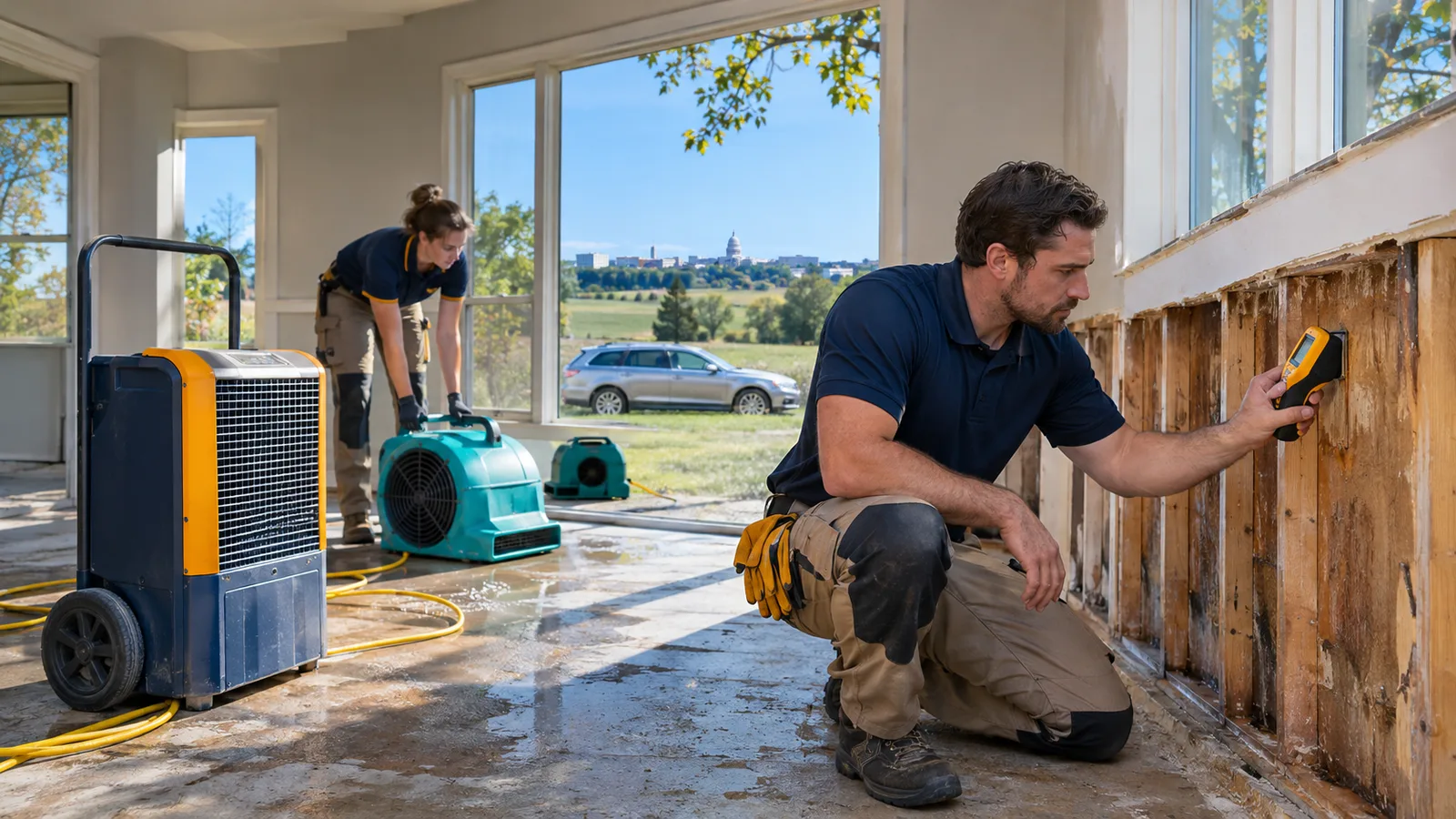
Water damage in Madison, WI requires a prompt, methodical response. Water can travel under flooring, wick into drywall, and remain inside wall cavities after the visible puddle is gone. Water Damage Restoration Madison WI identifies the affected materials, removes standing water, sets up drying equipment, and documents progress until the structure reaches appropriate drying goals.
For every property, Madison's water damage restoration specialists tailor the approach to the source, the materials involved, and the extent of migration. A supply-line leak in a finished basement calls for a different plan than rain entering around a window or water spreading across a commercial floor. The first priority is stopping the source when it is safe and practical. The next is limiting further damage while determining what can be dried and what must be removed.
Madison properties face several seasonal risks. Freezing weather can contribute to burst plumbing, while spring thaw and heavy rain can expose drainage or foundation problems. Basements are common throughout the area, so water may reach carpet, insulation, drywall, stored belongings, and mechanical areas before anyone notices it. Quick action reduces the time moisture has to spread into adjoining rooms.
Assessment through structural drying
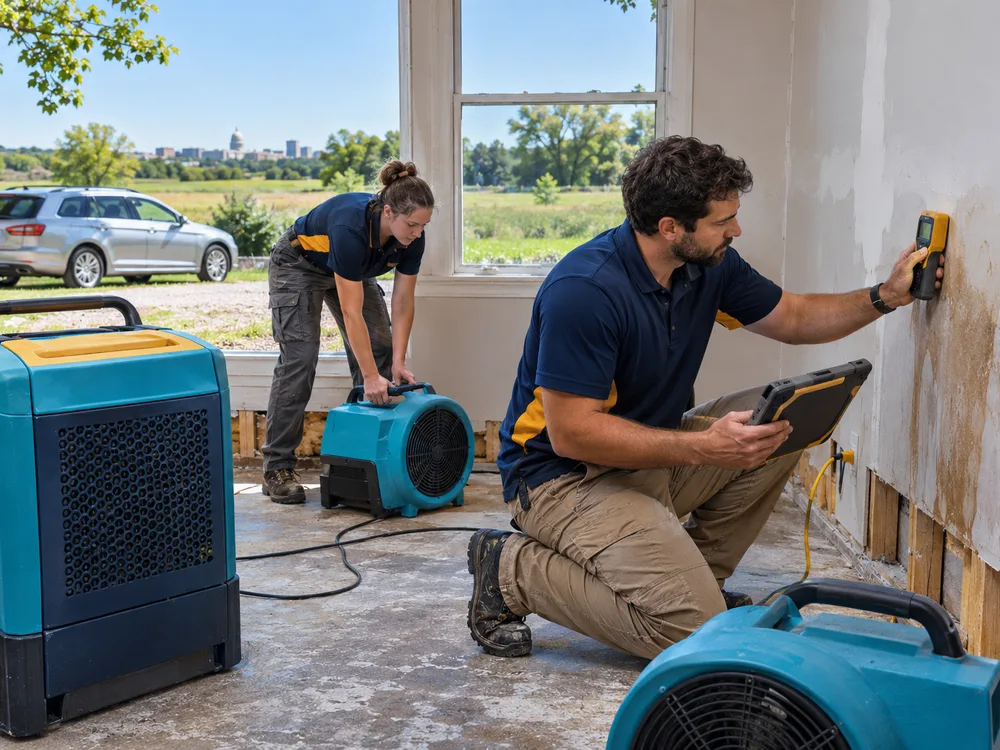
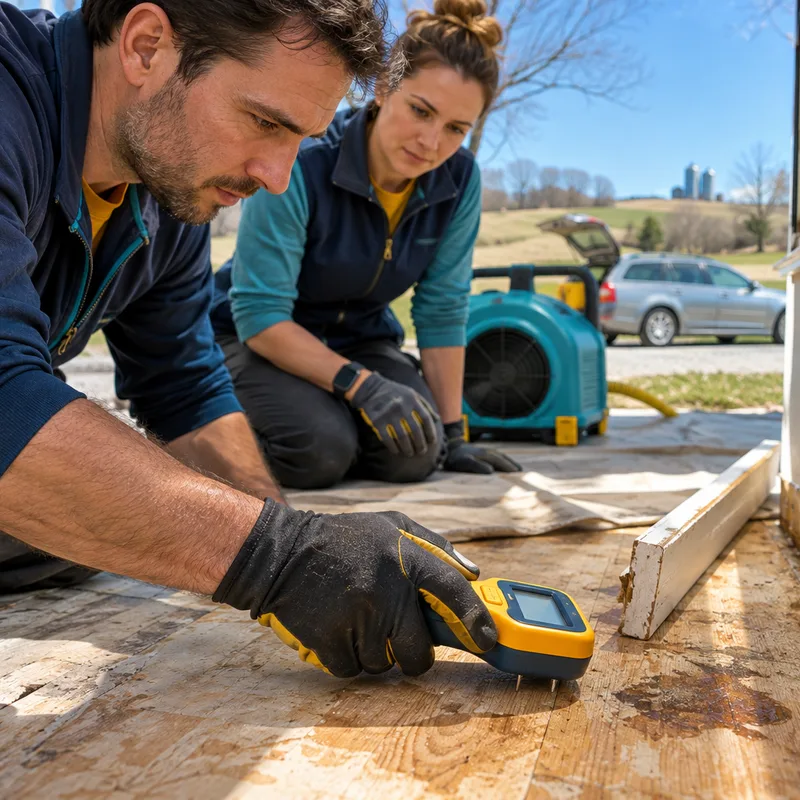
Restoration starts with an inspection of the source and the path the water followed. Technicians may use noninvasive moisture meters, penetrating meters, thermal imaging, and direct checks inside accessible cavities. These tools help define the affected area; they do not replace hands-on inspection or repeated moisture readings.
Standing water is removed with extraction equipment. Wet carpet pad, swollen engineered wood, saturated insulation, or deteriorated drywall may need removal when drying in place is not practical. Materials that remain are treated according to their condition and the water category, then dried with air movers and dehumidifiers. Equipment placement and operating conditions are adjusted as readings change.
The Institute of Inspection, Cleaning and Restoration Certification classifies water by contamination risk. Category One begins as water from a sanitary source. Category Two contains enough contamination to present a health concern, while Category Three is grossly contaminated and requires stricter controls. Time, temperature, and contact with dirty materials can worsen conditions, so the initial source does not tell the whole story.
Sources and affected areas
Failed supply lines, leaking fixtures, appliance connections, and pipe breaks can release water behind cabinets, beneath floors, or through ceilings.
Water entering a basement can affect finished walls, carpet, insulation, stored contents, and wood framing. Cleanup must account for both visible water and moisture held in porous materials.
Wind-driven rain and roof leaks may wet attic insulation, ceiling cavities, wall assemblies, and interior finishes. The exterior opening must be corrected before permanent interior repairs.
Overflowing fixtures and drain backups require careful classification because the level of contamination determines which materials can be cleaned and which should be discarded.
Offices, retail spaces, multifamily buildings, and other commercial properties need coordinated extraction and drying that considers occupancy, access, safety, and business operations.
Stains and odors may point to water behind baseboards, under resilient flooring, or inside a wall. Targeted testing helps avoid unnecessary demolition while locating the affected materials.
A measured restoration sequence
Each step responds to measured conditions, from identifying the source through documenting the final repair scope.
Request Emergency ServiceWe locate the likely source, identify safety concerns, map visible and hidden moisture, and recommend immediate steps to prevent additional water from entering.
Portable or truck-mounted extraction equipment removes accessible water. Fast extraction shortens the drying workload and helps limit migration into nearby materials.
Materials are evaluated by contamination, physical damage, value, and drying feasibility. Necessary removal may include carpet pad, insulation, trim, drywall, or damaged flooring.
Air movers promote evaporation while dehumidifiers remove moisture from the air. Containment or targeted drying may be used to concentrate airflow in affected spaces.
Readings are taken during the drying period and compared with suitable dry reference materials. Equipment is repositioned or removed as conditions improve.
Affected surfaces are cleaned as conditions require. Once drying is complete, the remaining repair scope can be documented so finishes and removed materials can be restored.
Measured for the building
Madison has a mix of older homes, newer subdivisions, multifamily properties, and commercial buildings. Construction details affect how moisture moves. Plaster walls in older homes may conceal water differently than modern drywall assemblies, and layered flooring can trap moisture between finish materials and the subfloor.
In older areas such as Marquette and Tenney-Lapham, technicians may encounter plaster, wood trim, and previous remodels that create several concealed layers. Downtown apartments and commercial buildings can require coordination with property managers and neighboring occupants because water often crosses unit or floor boundaries. In newer Far West Side homes, finished lower levels may contain wall cavities, insulation, and floating floors that need focused testing after a plumbing leak or water entry.
Drying decisions should be based on measurable conditions rather than appearance alone. Surface dryness does not prove that a subfloor or wall plate is dry. We document affected areas, set drying goals, and monitor progress. When repair work is needed, the scope is based on the materials actually removed or damaged.
Safety and documentation first
Protect people first. Avoid standing water near electrical outlets, appliances, extension cords, or a wet electrical panel. If the source is a plumbing fixture and the shutoff is safely accessible, stop the flow. Do not enter an area with a sagging ceiling, visible structural damage, sewage, or a suspected electrical hazard.
Photograph affected rooms and belongings when it is safe to do so. Keep damaged materials available for inspection unless they create an immediate health or safety concern. Your insurer may ask for records of the source, affected areas, mitigation work, and removed materials. Restoration contractors can document conditions and provide an itemized scope, but the insurance carrier determines coverage under the policy.
Madison Water Utility advises customers on public water service matters, but leaks inside a building usually fall to the property owner and a qualified plumber. Stormwater or sanitary sewer concerns may involve the City of Madison, depending on the source. Determining where the water came from is an early part of choosing the right response.
The longer water remains in porous materials, the farther the damage may spread. Arrange an inspection to identify the wet areas and establish a practical cleanup and drying plan.
Call for Emergency HelpPractical answers before cleanup
Water removal and moisture assessment should begin as soon as the area is safe to enter. Drywall, wood, insulation, and carpet pad can absorb water beyond the visible boundary. During Madison freezes, a broken pipe may continue releasing water until the proper shutoff is closed, so controlling the source comes first.
Many straightforward drying projects take several days, but the actual timeline depends on saturation, materials, temperature, humidity, and access to trapped moisture. Concrete, layered flooring, plaster, insulation, and enclosed wall cavities may dry at different rates. Moisture readings, rather than a fixed schedule, should determine when drying equipment is removed.
Some wet materials can be dried, while contaminated, swollen, delaminated, or structurally weakened materials usually require removal. Clean-water exposure may allow more drying options than a drain backup. Wood flooring, drywall, plaster, and subflooring are evaluated separately because each material responds differently to moisture.
Coverage depends on the cause of loss and the terms of the policy. Sudden plumbing failures are often handled differently from long-term seepage, maintenance problems, surface flooding, or sewer backup. Document the affected areas and notify the insurer promptly; only the insurance carrier can confirm coverage, deductibles, and policy limits.
The cost depends on the amount of water, contamination category, affected materials, extraction needs, drying time, access, and required repairs. A contained clean-water loss generally costs less than water that has crossed several rooms or affected finished basement assemblies. An on-site inspection is needed for a written scope based on actual conditions.
Mold remediation is not automatically required after every water loss. Prompt extraction and verified structural drying may prevent conditions from developing into a separate mold project. If visible growth, persistent odor, or long-term moisture is found, the work plan should account for containment, material removal, and cleaning appropriate to those conditions.
Emergency mitigation can often begin before an adjuster visits when delaying work would allow damage to spread. Photograph conditions, keep records, and preserve representative samples when practical. The property owner remains responsible for authorizing work, and the insurer decides which charges are covered under the policy.
Tell us what happened and which areas are affected. Water Damage Restoration Madison WI can assess the moisture, explain the recommended work, and prepare a practical scope for cleanup, drying, and repairs.